 adittijain1988@gmail.com
 +91-9999518813
 WhatsApp: +91-9999518813


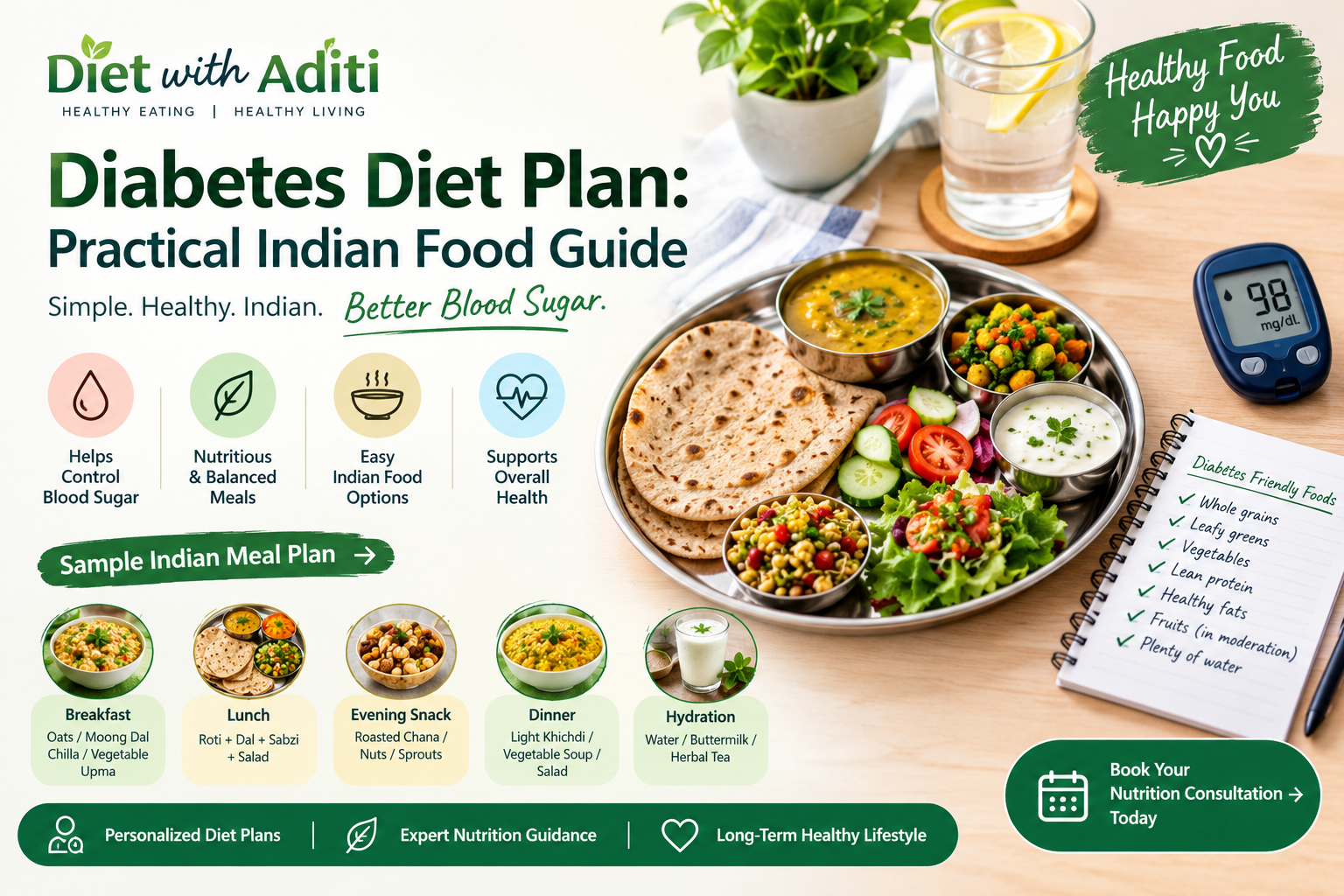
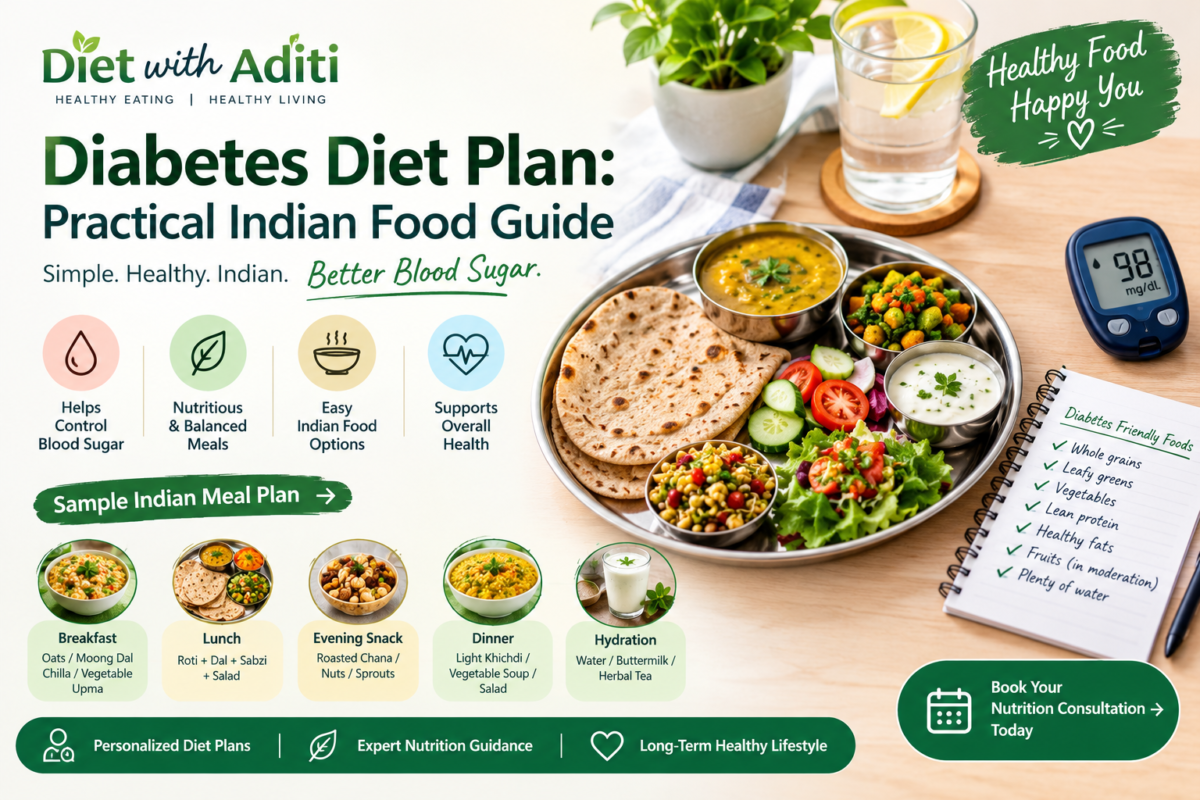
Managing diabetes starts with understanding how food, portion sizes, physical activity, and daily routines can affect blood glucose levels. A well-planned diabetes diet plan can help you make informed food choices while enjoying familiar Indian meals.
If you are looking for a diabetes diet plan for Indians, you do not necessarily need to give up roti, rice, dal, or your favourite homemade dishes. The key is to focus on balanced meals, appropriate portions, fibre-rich foods, and a consistent eating routine that suits your individual needs.
At Diet with Aditi, the aim is to make healthy eating practical and sustainable through nutrition education and personalized dietary guidance.
In this guide, you will learn how to build a balanced Indian diabetes diet plan, which foods to include, which foods to limit, and how to plan breakfast, lunch, dinner, and snacks.
What Is a Diabetes Diet Plan?
A diabetes diet plan is an eating pattern designed to support blood glucose management while providing the nutrients your body needs. It considers the types of food you eat, portion sizes, meal timing, activity levels, medications, and individual health requirements.
A balanced Indian diet plan for diabetes can include vegetables, pulses, whole grains, suitable protein sources, healthy fats, and whole fruits in appropriate portions.
There is no single diabetes diet that works for everyone. Your ideal meal plan depends on factors such as your blood glucose levels, medication, food preferences, activity level, and other health conditions.
Why Is a Balanced Diet Important for Diabetes?
Food choices can influence blood glucose levels, energy levels, and overall health. A balanced eating pattern can support diabetes management in several ways.
- Blood glucose management: Choosing suitable carbohydrate portions and combining foods thoughtfully can help manage post-meal glucose levels.
- Fibre intake: Vegetables, pulses, and whole grains provide fibre and can support digestive health.
- Heart health: Limiting excess salt, saturated fat, and highly processed foods can support cardiovascular health.
- Weight management: Balanced portions and regular meals may help people work towards an appropriate weight.
- Long-term nutrition: A varied diet helps provide essential vitamins, minerals, protein, and other nutrients.
Dietary changes should complement your prescribed treatment rather than replace diabetes medication or medical advice.
Best Foods to Include in an Indian Diabetes Diet Plan
A practical diabetes diet plan can include a variety of familiar Indian foods.
1. Whole Grains and High-Fibre Carbohydrates
Examples include:
- Whole-wheat roti
- Oats
- Barley
- Dalia
- Millets such as jowar and bajra
- Brown rice in suitable portions
Whole grains can provide fibre and other nutrients. However, whole grains still contain carbohydrates, so portion size remains important.
2. Vegetables and Leafy Greens
Include a variety of non-starchy vegetables, such as:
- Spinach
- Methi leaves
- Cauliflower
- Cabbage
- Bhindi
- Lauki
- Tinda
- Cucumber
- Beans
Vegetables can add fibre, vitamins, minerals, and volume to meals. Try to include a generous variety of non-starchy vegetables throughout the day.
3. Protein-Rich Foods
Protein can help make meals satisfying and nutritionally balanced.
Suitable options may include:
- Dal
- Chana
- Rajma
- Moong
- Soybeans and tofu
- Eggs
- Fish
- Skinless chicken
- Plain curd
Choose options that suit your preferences and medical requirements. People with kidney disease may need individualized advice about protein intake.
4. Healthy Fats
Small amounts of unsaturated fats can be part of a balanced diet.
Examples include nuts, seeds, and suitable vegetable oils. Keep portions appropriate because fats are energy-dense, and limit excessive use of ghee, butter, and deep-fried foods where recommended.
5. Whole Fruits in Appropriate Portions
People with diabetes can often enjoy whole fruits as part of a balanced meal plan.
Options may include apples, guava, oranges, pears, and papaya. The suitable portion depends on your overall carbohydrate intake and individual glucose response.
Whole fruit is generally preferable to fruit juice because it retains more fibre. You do not need to avoid all fruit simply because you have diabetes.
Sample Indian Diabetes Diet Plan for One Day
The following is an illustrative meal plan, not an individualized prescription. Your portions and food choices may need adjustment according to your medication, glucose levels, nutritional needs, and clinician’s advice.
| Time | Meal | Example food options |
|---|---|---|
| Early morning | Hydration | Water |
| Breakfast | Balanced breakfast | Vegetable dalia or vegetable moong dal chilla with plain curd |
| Mid-morning | Optional snack | A small portion of whole fruit, if suitable |
| Lunch | Balanced Indian meal | Roti, dal, seasonal sabzi, salad, and plain curd |
| Evening | Snack | Roasted chana or a small portion of nuts |
| Dinner | Balanced meal | Roti or a suitable portion of rice, vegetables, and dal or another protein source |
Adjust the quantities to your requirements. Snacks are not essential for everyone, and some people may need different meal timings depending on their medication.
If you use insulin or medicines that can cause low blood glucose, discuss meal timing and carbohydrate intake with your healthcare professional.
How to Plan a Diabetes-Friendly Breakfast
Breakfast should fit your nutritional needs, appetite, medication schedule, and daily routine.
Some options to discuss with your nutritionist include:
- Vegetable moong dal chilla with plain curd
- Vegetable oats with an appropriate protein source
- Besan chilla with vegetables
- Vegetable dalia with a suitable protein accompaniment
- Eggs with vegetables and whole-grain toast
Avoid assuming that a food is automatically suitable just because it is labelled healthy. The total carbohydrate content, portion size, preparation method, and accompanying foods also matter.
How to Build a Balanced Lunch and Dinner
Lunch and dinner can follow a simple meal-planning approach.
Use the Plate Method
For many people, a useful starting point is to divide a standard plate into sections:
- Half the plate: non-starchy vegetables
- One-quarter: protein-rich foods
- One-quarter: carbohydrate-containing foods, such as roti, rice, or other grains
This is a general guide, not a substitute for individualized medical nutrition advice.
Balance Roti and Rice Portions
You do not necessarily have to eliminate either roti or rice from your diet. Instead, pay attention to portions and balance them with vegetables and protein.
For example, if your meal contains rice, include dal or another protein source and plenty of vegetables. If you prefer roti, pair it with sabzi and an appropriate protein source.
The best portions depend on your individual carbohydrate requirements and glucose response.
Foods to Limit in a Diabetes Diet Plan
Some foods can make it more difficult to manage glucose levels or maintain a balanced eating pattern when consumed frequently or in large quantities.
Consider limiting:
- Sugar-sweetened beverages
- Regular consumption of sweets and desserts
- Large portions of refined grains
- Packaged snacks high in added sugar or salt
- Deep-fried foods
- Excessive amounts of sugary tea or coffee
- Frequent fruit juice consumption
You do not need to follow an unnecessarily restrictive diet. A sustainable eating pattern should provide adequate nutrition and fit your daily life.
Common Diabetes Diet Mistakes to Avoid
Skipping Meals Without a Plan
Skipping meals may not be suitable for everyone, particularly people taking insulin or certain glucose-lowering medicines. Ask your healthcare professional how to coordinate meals and medication safely.
Eliminating All Carbohydrates
Carbohydrates are found in many nutritious foods, including fruits, pulses, milk, and whole grains. The goal is to choose appropriate types and portions rather than automatically eliminating all carbohydrates.
Relying on Herbal Remedies Alone
Herbal products and supplements should not replace prescribed diabetes treatment. Some may interact with medications or affect blood glucose levels.
Following Someone Else’s Diet Chart
A diet that works for another person may not suit your nutritional needs, medications, or medical conditions. Personalized advice is especially important if you have kidney disease, are pregnant, or use medication that can cause hypoglycaemia.
Expecting Immediate Results
Blood glucose management is influenced by many factors, including food, physical activity, stress, sleep, illness, and medication. Sustainable changes and appropriate medical monitoring are more useful than expecting a particular food to produce immediate results.
How a Personalized Diabetes Diet Plan Can Help
A personalized diabetes diet plan takes your daily routine, food preferences, health history, and nutritional requirements into account.
A qualified nutrition professional may help you:
- Understand carbohydrate portions and balanced meals
- Plan Indian meals around your preferences
- Identify practical alternatives to frequently consumed sugary foods
- Develop a consistent and realistic eating routine
- Monitor dietary progress alongside appropriate medical care
If you are looking for nutrition guidance, visit Diet with Aditi to explore the available services and enquire about a consultation.
Frequently Asked Questions About Diabetes Diet Plans
1. What is the best Indian diet plan for diabetes?
A balanced Indian diet plan may include vegetables, dal, pulses, whole grains, suitable protein sources, healthy fats, and portions of whole fruit. The best plan depends on individual glucose levels, medication, nutritional requirements, and food preferences.
2. Can people with diabetes eat roti?
Yes, many people with diabetes can include roti in their meals. Whole-wheat roti can provide fibre, but it still contains carbohydrates. Portion size and the balance of the overall meal are important.
3. Is rice allowed in a diabetes diet plan?
Rice can often be included in appropriate portions. Pairing it with vegetables and protein-rich foods can help create a more balanced meal. The suitable portion depends on individual carbohydrate requirements.
4. Which breakfast is good for diabetes?
Options may include vegetable moong dal chilla, vegetable dalia, oats with a suitable protein source, or eggs with vegetables. Choose portions and combinations that suit your nutritional needs and medication schedule.
5. Which fruits can people with diabetes eat?
Many people with diabetes can enjoy whole fruits such as apples, guava, oranges, pears, and papaya in suitable portions. Fruit choice and portion size should fit the overall meal plan.
6. Should people with diabetes avoid sugar completely?
Reducing added sugar is generally helpful, especially in sugary drinks and frequently consumed sweets. Individual dietary advice can help you understand how to include occasional treats while managing overall carbohydrate intake.
7. Can a diabetes diet plan help with weight management?
A balanced eating pattern can support weight management when appropriate for the individual. Results depend on overall energy intake, activity, medications, health conditions, and consistency.
8. How many meals should a person with diabetes eat each day?
There is no single ideal number of meals for everyone. Meal frequency and timing should fit individual preferences, medication, glucose patterns, and nutritional needs.
9. Is brown rice always better than white rice for diabetes?
Brown rice generally contains more fibre than white rice, but both contain carbohydrates. Portion size, preparation, the rest of the meal, and your individual glucose response all matter.
10. Should I consult a nutritionist for a diabetes diet plan?
A qualified nutrition professional can help tailor food choices and portions to your needs. If you have diabetes, coordinate dietary changes with your treating healthcare professional, especially if you take glucose-lowering medication or have other medical conditions.
Conclusion
A practical diabetes diet plan does not have to mean giving up traditional Indian foods. With balanced portions, vegetables, suitable protein sources, fibre-rich foods, and sensible meal planning, many people can develop a more sustainable approach to eating.
The most suitable Indian diabetes diet plan is one that meets your nutritional needs, fits your lifestyle, and works alongside your prescribed medical treatment.
For personalized nutrition guidance, visit Diet with Aditi to explore consultation options and learn more about building healthier eating habits.