 adittijain1988@gmail.com
 +91-9999518813
 WhatsApp: +91-9999518813


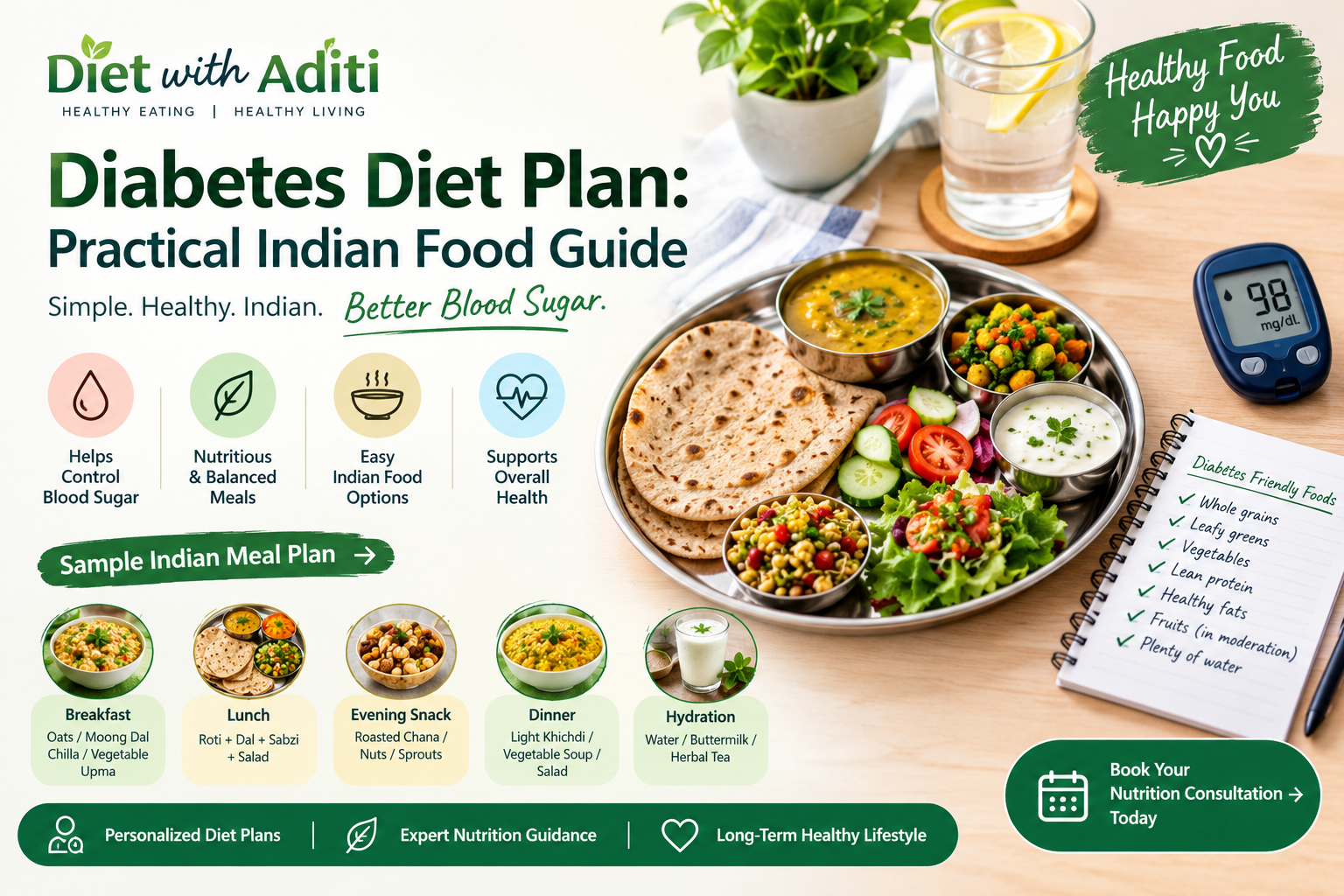
Are you confused between a personalized diet plan and a generic diet chart for weight loss? With so many diet plans available online, choosing the right approach can be challenging. Some people follow diet charts found on the internet, while others prefer a customized nutrition plan designed around their lifestyle, food preferences, health goals, and nutritional needs.
If your goal is sustainable weight loss, healthy eating, or improving your overall nutrition, understanding the difference between a personalized diet plan and a generic diet chart can help you make a more informed decision.
At DietWithAditi, you can explore professional online dietitian and nutritionist consultation options to understand which nutrition approach may suit your individual needs.
What Is a Personalized Diet Plan?
A personalized diet plan is a nutrition plan tailored to an individual’s needs, lifestyle, food preferences, activity level, health considerations, and personal goals. Unlike a standard diet chart, it considers that everyone’s nutritional requirements and daily routines are different.
For example, a working professional with limited time to cook may need a different meal schedule from someone who exercises regularly or has specific dietary requirements.
A personalized diet plan may include:
- Individual calorie and nutritional requirements.
- Meal timings based on daily routines.
- Indian foods such as roti, dal, rice, vegetables, curd, and paneer.
- Vegetarian or non-vegetarian meal preferences.
- Practical portion guidance for balanced eating.
- Adjustments based on progress, preferences, and changing needs.
Benefits of a Personalized Diet Plan
1. Designed around your goals
Whether you want to manage your weight, improve eating habits, or build a balanced diet routine, the plan can be tailored to your specific objectives.
2. Fits your lifestyle
A customized diet chart can account for office hours, family meals, travel, exercise, and cooking preferences.
3. Includes familiar foods
You do not necessarily need to give up your favourite Indian foods. A balanced plan can incorporate familiar meals in appropriate portions.
4. Allows adjustments
As your routine, goals, or nutritional needs change, your diet plan can be reviewed and modified where appropriate.
5. Supports sustainable habits
A realistic nutrition plan can help you develop consistent eating habits instead of relying on short-term, restrictive diets.
What Is a Generic Diet Chart?
A generic diet chart is a standard meal plan designed for a broad audience rather than one specific individual. It may be found in blogs, magazines, social media posts, or general weight-loss guides.
For example, a generic weight-loss diet chart might recommend oats for breakfast, fruit as a snack, roti and vegetables for lunch, and soup for dinner.
Although these suggestions may provide general ideas for balanced eating, they may not suit everyone’s nutritional requirements, food preferences, medical history, or daily schedule.
Limitations of a Generic Diet Chart
- It may not account for individual energy requirements.
- Meal suggestions may not match your food preferences.
- Fixed timings may be difficult to follow with your schedule.
- It may not consider specific health conditions or nutritional deficiencies.
- It may not include personalised progress reviews or adjustments.
A generic diet chart can be a useful starting point for learning about healthy food choices. However, it should not automatically be treated as a suitable diet plan for everyone.
Personalized Diet Plan vs Generic Diet Chart: Key Differences
| Feature | Personalized Diet Plan | Generic Diet Chart |
|---|---|---|
| Meal planning | Tailored to individual needs | Standardised meal suggestions |
| Food preferences | Can accommodate preferences | May offer limited flexibility |
| Lifestyle | Considers work, activity, and routine | Usually follows a fixed structure |
| Weight management | Tailored to individual goals | General weight-management guidance |
| Health considerations | Can account for relevant needs with professional guidance | May not address individual health concerns |
| Follow-up | Reviews and adjustments may be available | Usually no individual follow-up |
| Flexibility | Can be adapted to changing needs | Often follows a preset schedule |
| Best use | Individualised nutrition support | General healthy-eating ideas |
The key difference is personalisation. A diet chart that works for one person may not provide the right balance, portions, or flexibility for another.
Which Is Better for Weight Loss?
For many people seeking individualised weight management, a personalised diet plan can be more appropriate because it considers food preferences, daily activity, nutritional requirements, and long-term habits.
Successful weight management is not simply about eating less. It also involves choosing nutritious foods, managing portions, maintaining consistency, sleeping adequately, and staying physically active.
A practical weight-loss diet plan may include:
- Breakfast: Vegetable poha, oats, besan chilla, or another balanced breakfast.
- Mid-morning: A fruit or another suitable snack if needed.
- Lunch: Roti or rice, dal or another protein source, vegetables, and curd if suitable.
- Evening snack: Roasted chana, fruit, or another balanced option.
- Dinner: A balanced combination of protein, vegetables, and an appropriate carbohydrate source.
These are general meal ideas, not a personalised prescription. Portion sizes and food choices should reflect individual requirements.
Avoid extreme calorie restriction, skipping meals unnecessarily, or following crash diets for rapid weight loss. If you have a medical condition or special nutritional needs, consult an appropriately qualified healthcare professional.
Why Choose an Online Dietitian for a Personalized Diet Plan?
An online dietitian consultation can make nutrition support more accessible, particularly for people with busy schedules or limited access to in-person appointments.
Depending on the service offered, an online consultation may help you:
- Discuss your health goals and current eating habits.
- Share your food preferences and daily routine.
- Understand practical meal-planning strategies.
- Identify realistic changes to your eating habits.
- Review your progress and discuss adjustments when follow-up is available.
For people searching for an online dietitian consultation, personalized diet plan for weight loss, or nutritionist consultation online, choosing a service that offers individual attention and evidence-informed guidance is important.
Visit DietWithAditi.com to learn more about online dietitian and nutritionist services.
How to Choose the Right Diet Plan for Your Needs
Before selecting a diet plan, consider the following factors:
1. Define Your Goal
Are you interested in weight management, balanced eating, improving your food habits, or addressing a specific nutritional concern? A clear goal helps guide your choices.
2. Consider Your Food Preferences
Choose a plan that works with your vegetarian or non-vegetarian preferences, cultural eating habits, budget, and food availability.
3. Evaluate Your Daily Routine
Your meals should fit your work schedule, sleep routine, physical activity, and family commitments.
4. Check the Quality of Guidance
Look for an appropriately qualified nutrition professional who uses evidence-informed practices and explains recommendations clearly.
5. Prioritise Sustainability
A useful diet plan should be practical enough to follow consistently. Be cautious of promises of guaranteed results, miracle foods, or extreme weight loss in a very short time.
Common Mistakes to Avoid When Following a Diet Chart
Even a well-designed diet chart may be difficult to follow if it is unrealistic. Avoid these common mistakes:
- Following someone else’s diet without considering your needs.
- Cutting out entire food groups without a valid reason.
- Ignoring protein, fibre, and overall nutritional balance.
- Expecting the same weight-loss results as another person.
- Using online diet charts to manage medical conditions without professional advice.
- Treating temporary weight changes as the only measure of progress.
Instead, focus on balanced meals, appropriate portions, regular activity, and sustainable changes that fit your life.
Book an Online Dietitian Consultation with DietWithAditi
Choosing between a personalized diet plan and a generic diet chart depends on your goals, lifestyle, and individual nutritional needs. A generic chart can offer helpful meal ideas, while a personalised plan can provide more tailored guidance and flexibility.
If you are looking for an online dietitian in Bangalore, a personalized diet plan for weight loss, or professional nutrition guidance, explore the consultation options available through DietWithAditi.
Ready to take the next step towards healthier eating?
Book Your Online Dietitian and Nutritionist Consultation
Start with practical nutrition advice that fits your lifestyle and supports your long-term health goals.
Frequently Asked Questions (FAQs)
1. What is the difference between a personalized diet plan and a generic diet chart?
A personalized diet plan is tailored to an individual’s goals, lifestyle, food preferences, and nutritional needs. A generic diet chart provides standard meal suggestions intended for a broader audience.
2. Is a personalized diet plan better for weight loss?
It can be more suitable for people who need individualised guidance because it considers their requirements and routine. Weight-loss outcomes still vary based on many factors, including consistency, activity, health, and individual circumstances.
3. Can I follow a generic diet chart for weight loss?
A generic chart may provide general healthy-eating ideas. However, it may not meet your individual nutritional requirements. Consider professional advice if you have specific goals, health concerns, or dietary restrictions.
4. How do I get a personalized diet plan online?
You can explore an online dietitian consultation, discuss your goals and eating habits, and share relevant information about your lifestyle and preferences. The professional can then advise you on an appropriate nutrition approach.
5. Can a personalized diet plan include Indian food?
Yes. Depending on your nutritional requirements and preferences, a personalised plan can include familiar Indian foods such as roti, dal, rice, idli, dosa, vegetables, curd, paneer, and other suitable protein sources.
6. How long does it take to see results from a personalized diet plan?
Results depend on your goals, starting point, health, consistency, and other individual factors. Sustainable changes generally take time, and no diet plan can guarantee a particular result or timeline.
7. Is an online dietitian consultation suitable for busy professionals?
It may be a convenient option for busy professionals who prefer remote nutrition guidance. Suitability depends on the service available and whether your individual needs can be addressed remotely.
8. Does a personalized diet plan mean I need to stop eating my favourite foods?
Not necessarily. A flexible plan may incorporate favourite foods in suitable portions while helping you maintain a balanced overall eating pattern.