 adittijain1988@gmail.com
 +91-9999518813
 WhatsApp: +91-9999518813


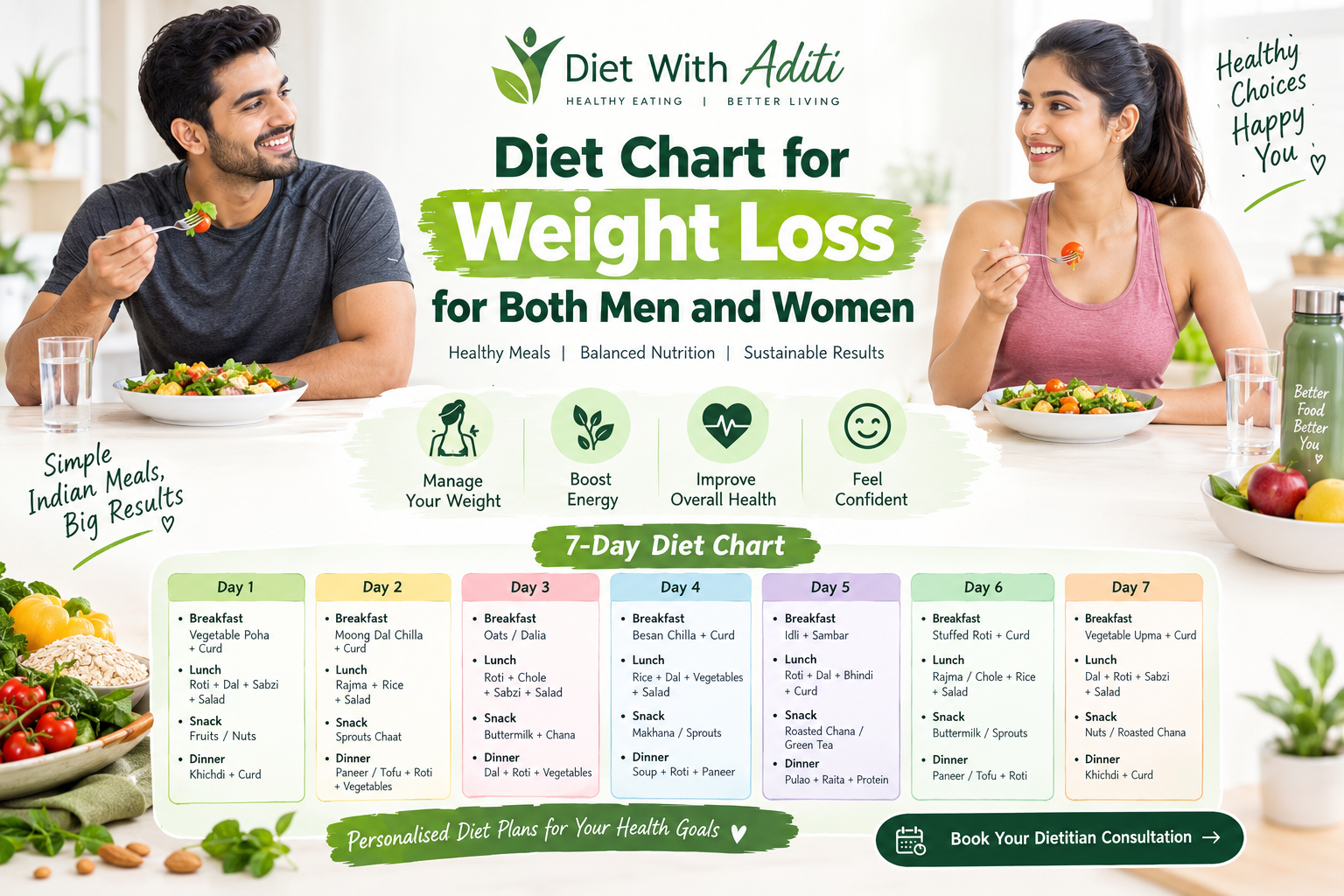
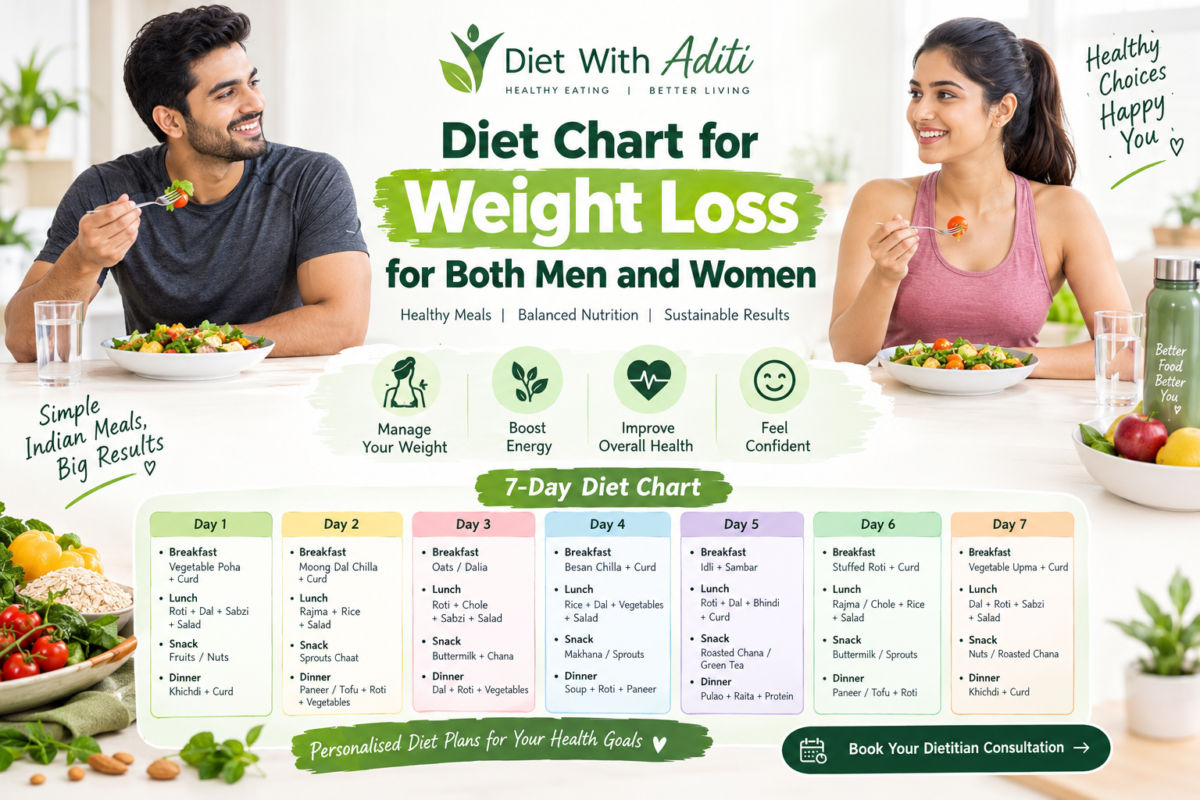
Losing weight in a healthy way starts with balanced nutrition, appropriate portion sizes, and consistent daily habits. Whether you are a man or a woman, following a well-planned diet chart for weight loss can help you make better food choices without giving up traditional Indian meals.
An effective diet chart for weight loss for both men and women should include protein-rich foods, whole grains, vegetables, fruits, healthy fats, and adequate fluids. The ideal diet varies according to age, body weight, height, activity level, health conditions, and individual goals.
At Diet With Aditi, you can explore practical nutrition guidance to help you build healthier eating habits that fit your lifestyle.
What Is the Best Diet Chart for Weight Loss for Men and Women?
The best diet chart for weight loss is one that provides essential nutrients while helping you maintain an appropriate calorie intake. There is no single diet plan that works equally well for everyone.
Men and women can follow similar healthy eating principles, but their energy and nutrient requirements may differ. A personalised diet plan should account for these differences rather than prescribing the same portions to everyone.
A balanced Indian diet chart should include:
- Protein: Dal, beans, chickpeas, paneer, tofu, curd, eggs, fish, or chicken.
- Carbohydrates: Roti, oats, dalia, rice, and other whole grains.
- Vegetables: Spinach, carrots, cucumber, cauliflower, beans, and seasonal vegetables.
- Fruits: Apples, oranges, guava, papaya, and other seasonal options.
- Healthy fats: Nuts, seeds, and moderate amounts of cooking oil.
- Fluids: Water and other suitable unsweetened beverages.
Combining these foods in suitable portions can help you build a balanced and sustainable weight management routine.
7-Day Diet Chart for Weight Loss for Both Men and Women
This sample Indian diet chart offers simple meal ideas for both men and women. Adjust portion sizes according to your nutritional needs, appetite, physical activity, and health requirements.
Day 1: Balanced Indian Diet Plan
- Early morning: Water and a few almonds, if desired.
- Breakfast: Vegetable poha with curd.
- Mid-morning: One seasonal fruit.
- Lunch: Roti, dal, mixed vegetable sabzi, and salad.
- Evening snack: Roasted chana or buttermilk.
- Dinner: Vegetable khichdi with curd and a vegetable side.
Day 2: Protein-Rich Diet Plan
- Early morning: Water.
- Breakfast: Moong dal chilla with curd.
- Mid-morning: Apple or guava.
- Lunch: Rajma, rice, and cucumber salad.
- Evening snack: Sprouts chaat.
- Dinner: Paneer or tofu bhurji, roti, and vegetables.
Day 3: Healthy Homemade Meals
- Early morning: Water.
- Breakfast: Vegetable oats or dalia.
- Mid-morning: Papaya or another seasonal fruit.
- Lunch: Roti, chole, vegetable sabzi, and salad.
- Evening snack: Unsweetened buttermilk and roasted chana.
- Dinner: Dal, roti, and cooked vegetables.
Day 4: Fibre-Rich Diet Plan
- Early morning: Water.
- Breakfast: Besan chilla with curd.
- Mid-morning: One fruit and a few nuts.
- Lunch: Rice, dal, vegetables, and salad.
- Evening snack: Roasted makhana or sprouts.
- Dinner: Vegetable soup, whole-grain roti, and paneer or tofu.
Day 5: Simple Weight Loss Meals
- Early morning: Water.
- Breakfast: Idli with sambar.
- Mid-morning: Seasonal fruit.
- Lunch: Roti, dal, bhindi sabzi, and curd.
- Evening snack: Roasted chana or unsweetened tea with a suitable snack.
- Dinner: Vegetable pulao, raita, and a protein-rich side.
Day 6: Balanced Vegetarian Diet
- Early morning: Water.
- Breakfast: Vegetable stuffed roti with curd.
- Mid-morning: Orange or guava.
- Lunch: Rajma or chole with rice and salad.
- Evening snack: Buttermilk or sprouts chaat.
- Dinner: Paneer or tofu with vegetables and roti.
Day 7: Flexible and Sustainable Eating
- Early morning: Water.
- Breakfast: Vegetable upma with curd.
- Mid-morning: One seasonal fruit.
- Lunch: Dal, roti, sabzi, and salad.
- Evening snack: Nuts in a suitable portion or roasted chana.
- Dinner: Moong dal khichdi with vegetables and curd.
Non-vegetarian alternatives, such as eggs, fish, or chicken, can be included according to personal preferences. This is a general meal guide, not a personalised calorie prescription.
Diet Chart for Weight Loss for Men
Men may have higher average energy requirements because of differences in body size, muscle mass, and activity levels. However, individual needs vary considerably.
A healthy diet chart for men should provide enough protein, fibre, carbohydrates, healthy fats, and essential micronutrients.
Sample Daily Diet Plan for Men
| Meal | Suggested food options |
|---|---|
| Breakfast | Eggs with whole-grain toast or moong dal chilla |
| Mid-morning | Fruit and a few nuts |
| Lunch | Roti or rice, dal, chicken or paneer, vegetables |
| Evening snack | Roasted chana, curd, or buttermilk |
| Dinner | Roti, vegetables, and a protein-rich food |
Men who exercise regularly or perform physically demanding work may need larger portions or additional meals. Avoid reducing calories excessively, especially when maintaining muscle and energy is important.
Diet Chart for Weight Loss for Women
Women have individual nutritional needs that may change with age, activity, menstrual health, pregnancy, breastfeeding, and menopause.
A healthy diet chart for women should provide sufficient protein, fibre, iron, calcium, and other essential nutrients while supporting an appropriate energy intake.
Sample Daily Diet Plan for Women
| Meal | Suggested food options |
|---|---|
| Breakfast | Vegetable poha with curd or besan chilla |
| Mid-morning | Guava, orange, or another seasonal fruit |
| Lunch | Roti, dal, vegetables, curd, and salad |
| Evening snack | Roasted chana or nuts in a suitable portion |
| Dinner | Vegetable khichdi with curd or paneer with roti |
Women should avoid overly restrictive diets that may leave them short of essential nutrients. Anyone with heavy menstrual bleeding, pregnancy-related nutritional needs, or a diagnosed health condition should seek individualised professional advice.
Indian Foods to Include in a Weight Loss Diet Chart
You do not need special diet products or expensive ingredients to work towards your weight goals. Everyday Indian foods can provide balanced nutrition.
1. Dal and Pulses
Moong dal, masoor dal, rajma, chole, and chickpeas provide protein and fibre. Include them regularly to make meals more satisfying and nutritionally balanced.
2. Roti and Rice
Both roti and rice can fit into a healthy weight loss diet. Choose appropriate portions and pair them with vegetables and protein sources.
Completely eliminating carbohydrates is not necessary for weight loss.
3. Vegetables and Seasonal Fruits
Vegetables provide fibre, vitamins, and minerals, while whole fruits offer fibre and other essential nutrients. Try to include different colours and varieties throughout the week.
4. Protein-Rich Foods
Paneer, tofu, curd, milk, eggs, fish, chicken, and legumes help meet protein requirements. Adequate protein is particularly important when trying to maintain muscle during weight loss.
5. Nuts and Seeds
Almonds, walnuts, flaxseeds, and chia seeds can provide healthy fats and other nutrients. Because they are energy-dense, pay attention to portions.
Foods to Limit for Healthy Weight Loss
You do not have to completely eliminate your favourite foods. Instead, consider limiting foods that frequently contribute large amounts of calories without providing much nutritional value.
- Deep-fried snacks such as samosas and pakoras.
- Sugary beverages and frequent sweetened drinks.
- Large portions of sweets, biscuits, and cakes.
- Excessive amounts of oil, butter, and rich gravies.
- Frequent highly processed snacks.
- Alcohol, where applicable, particularly if it affects your overall energy intake or health.
A balanced eating pattern that you can maintain is generally more useful than following a highly restrictive diet for a short period.
Tips to Follow a Weight Loss Diet Chart Successfully
1. Focus on Portion Sizes
Healthy foods also contribute calories. Choose portions that suit your needs instead of following the same fixed quantities as someone with different nutritional requirements.
2. Include Protein in Main Meals
Add dal, beans, curd, paneer, tofu, eggs, fish, or chicken to suitable meals. Protein supports normal body functions and helps maintain muscle.
3. Stay Physically Active
Walking, cycling, swimming, strength training, and other enjoyable activities can support overall health and weight management. Increase activity gradually according to your fitness level.
4. Drink Enough Water
Stay hydrated throughout the day. Choose water regularly and limit sugary drinks when they contribute excess calories.
5. Get Adequate Sleep
Consistent sleep supports general health, energy, and healthy routines. Try to maintain a regular sleep schedule.
6. Avoid Crash Diets
Extreme calorie restriction and skipping meals may make it difficult to meet your nutritional needs. Focus on gradual, sustainable changes instead.
Why Choose a Personalised Weight Loss Diet Plan?
A general diet chart can help you organise meals, but it cannot account for every individual’s nutritional requirements.
A personalised weight loss diet plan may consider:
- Your current weight, height, age, and goals.
- Your daily routine and physical activity.
- Vegetarian or non-vegetarian food preferences.
- Your medical history and nutritional needs.
- Your food budget and cooking habits.
- Your progress and any necessary adjustments.
Working with a qualified dietitian can help you understand portion sizes, select suitable foods, and develop a practical eating routine.
If you are looking for guidance suited to your lifestyle, visit Diet With Aditi to explore the available nutrition services and consultation options.
Frequently Asked Questions (FAQs)
1. What is the best diet chart for weight loss for both men and women?
The best diet chart includes balanced portions of protein-rich foods, whole grains, vegetables, fruits, and healthy fats. The exact portions and calorie intake depend on individual requirements, activity levels, and health circumstances.
2. Is the same weight loss diet plan suitable for men and women?
The basic principles of healthy eating are similar, but calorie and nutrient requirements can differ. A personalised plan should account for body size, activity level, health status, and individual goals.
3. Can I eat roti and rice while following a weight loss diet chart?
Yes. Roti and rice can both be included in a weight loss diet. Focus on appropriate portions, balanced meals, and your overall eating pattern rather than eliminating carbohydrates.
4. What should I eat for breakfast to lose weight?
Healthy breakfast choices include moong dal chilla, besan chilla, vegetable poha with curd, oats, dalia, and idli with sambar. Including protein can make breakfast more balanced.
5. How many calories should men and women eat to lose weight?
There is no single calorie target for everyone. Energy requirements depend on factors such as age, height, weight, activity level, and health status. A qualified dietitian can help estimate an appropriate intake.
6. Can I lose weight with a vegetarian Indian diet?
Yes. A vegetarian Indian diet can support weight loss when portions and nutritional needs are appropriate. Include dal, beans, chickpeas, paneer, tofu, curd, milk, nuts, and seeds as suitable.
7. How long does it take to see results from a weight loss diet chart?
Progress varies from person to person. Consistent eating habits, physical activity, sleep, health conditions, and other individual factors influence results. Avoid expecting a guaranteed amount of weight loss within a fixed period.
8. Should I consult a dietitian for weight loss?
A qualified dietitian can help create a plan based on your nutritional requirements, food preferences, health conditions, and daily routine. Professional guidance may be especially useful if you have a medical condition or have struggled with restrictive diets.
Start Your Healthy Weight Loss Journey with Diet With Aditi
A healthy weight loss journey does not require starving yourself or eliminating traditional Indian foods. A balanced diet chart, suitable portions, regular physical activity, and consistent habits can help you work towards your goals.
Whether you are a man or a woman, the right plan should fit your nutritional needs, daily routine, and food preferences.
Looking for a personalised diet chart for weight loss? Visit Diet With Aditi to explore nutrition guidance and available consultation options.