 adittijain1988@gmail.com
 +91-9999518813
 WhatsApp: +91-9999518813


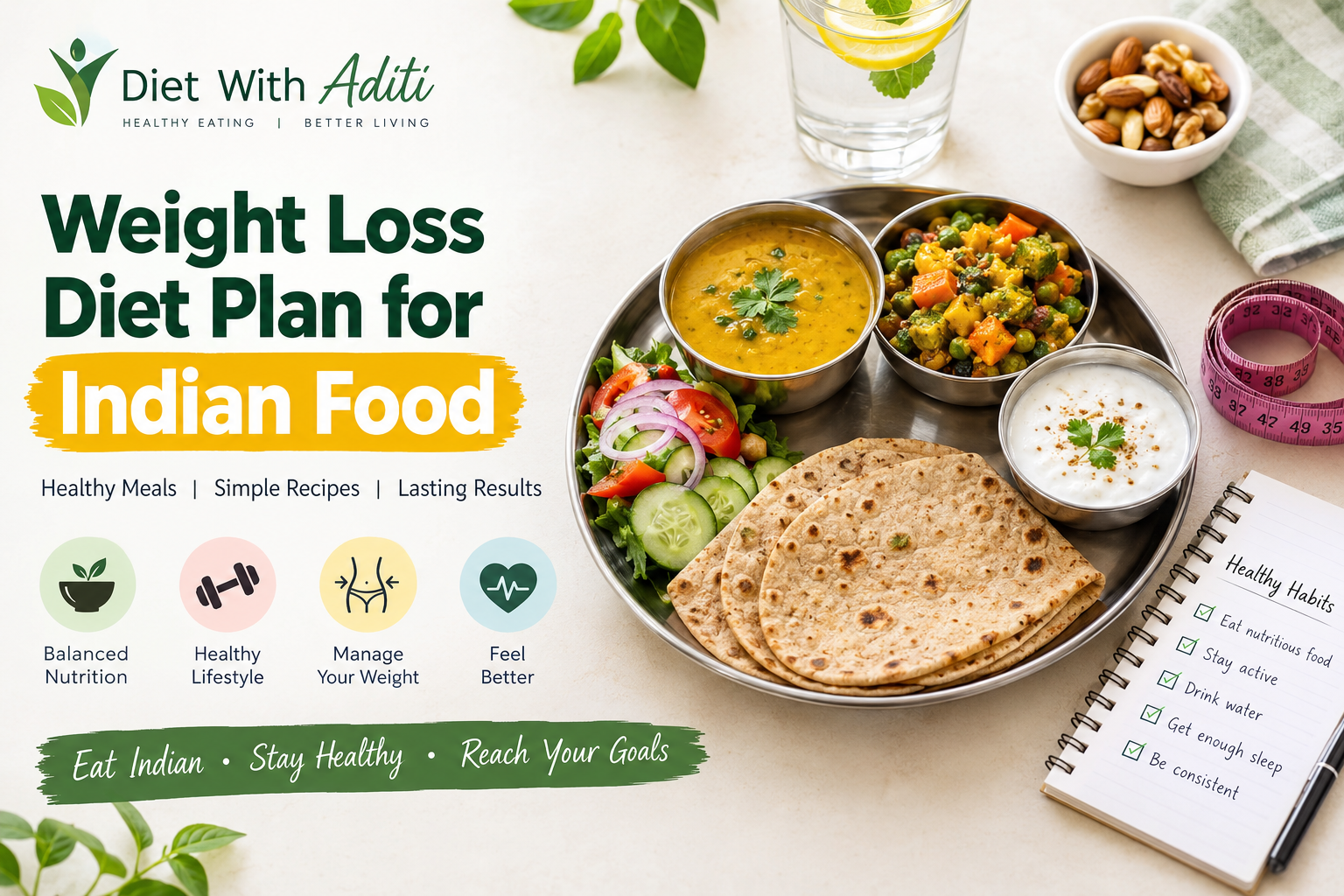
Losing weight does not mean giving up your favourite Indian foods. With the right portion sizes, balanced meals, and healthy eating habits, you can work towards your weight loss goals while enjoying everyday foods such as roti, dal, rice, vegetables, curd, and homemade meals.
A weight loss diet plan for Indian food focuses on balanced nutrition, appropriate calorie intake, protein-rich foods, and sustainable lifestyle changes. Whether you are a working professional, a homemaker, or someone beginning a weight loss journey, choosing the right Indian diet plan can help you build healthier eating habits.
At Diet With Aditi, you can explore personalised nutrition guidance designed around your lifestyle, food preferences, and health goals.
What Is the Best Weight Loss Diet Plan for Indian Food?
The best Indian diet plan for weight loss is one that provides adequate protein, fibre, healthy fats, vitamins, and minerals while maintaining an appropriate calorie intake.
Indian cuisine offers plenty of nutritious options, including lentils, beans, vegetables, whole grains, dairy products, nuts, seeds, and seasonal fruits.
Instead of following extreme diets or skipping meals, focus on eating balanced portions and maintaining consistency.
A healthy Indian weight loss diet should include:
- Whole grains such as roti, oats, and brown or regular rice in suitable portions.
- Protein sources such as dal, chickpeas, rajma, paneer, curd, tofu, eggs, fish, or chicken.
- Plenty of vegetables and seasonal fruits.
- Healthy fats from nuts, seeds, and suitable cooking oils.
- Adequate water and regular physical activity.
Your calorie and nutrient requirements depend on your age, height, weight, activity level, medical history, and individual goals.
7-Day Indian Diet Plan for Weight Loss
The following sample Indian diet plan provides meal ideas to help you start eating more balanced meals. Adjust portions according to your appetite, activity level, and nutritional needs.
Day 1: Simple and Balanced
- Breakfast: Vegetable poha with curd.
- Mid-morning: One seasonal fruit.
- Lunch: Two small rotis, dal, mixed vegetables, and salad.
- Evening snack: Roasted chana or a small handful of nuts.
- Dinner: Vegetable khichdi with curd and vegetables.
Day 2: Protein-Rich Meals
- Breakfast: Two moong dal chillas with curd.
- Mid-morning: Guava, apple, or orange.
- Lunch: Roti, rajma, and cucumber salad.
- Evening snack: Unsweetened buttermilk and roasted chana.
- Dinner: Paneer or tofu bhurji with roti and vegetables.
Day 3: Traditional Indian Foods
- Breakfast: Vegetable oats or dalia.
- Mid-morning: A bowl of seasonal fruit.
- Lunch: Rice, dal, vegetable sabzi, and curd.
- Evening snack: Sprouts chaat.
- Dinner: Vegetable dalia with a protein-rich side.
Day 4: Fibre-Focused Meals
- Breakfast: Vegetable besan chilla.
- Mid-morning: One fruit and a few nuts.
- Lunch: Roti, chole, and mixed salad.
- Evening snack: Plain curd or buttermilk.
- Dinner: Vegetable soup with paneer, tofu, or another protein source and whole-grain roti.
Day 5: Easy Homemade Meals
- Breakfast: Idli with sambar.
- Mid-morning: Papaya or another seasonal fruit.
- Lunch: Roti, dal, bhindi sabzi, and curd.
- Evening snack: Roasted makhana or chana.
- Dinner: Moong dal khichdi with vegetables and curd.
Day 6: Balanced Vegetarian Options
- Breakfast: Stuffed vegetable roti with plain curd, using moderate oil.
- Mid-morning: One seasonal fruit.
- Lunch: Rajma or chole with rice and salad.
- Evening snack: Sprouts chaat or unsweetened lassi.
- Dinner: Paneer or tofu tikka with vegetables and roti.
Day 7: Flexible and Sustainable Eating
- Breakfast: Vegetable upma with curd.
- Mid-morning: Fruit with a few nuts.
- Lunch: Homemade dal, roti, sabzi, and salad.
- Evening snack: Roasted chana or buttermilk.
- Dinner: Vegetable pulao with raita and a protein-rich side.
You can replace these options with suitable non-vegetarian meals, such as eggs, fish, or chicken, if they match your preferences. The plan is a general example, not a personalised calorie prescription.
Which Indian Foods Are Best for Weight Loss?
You do not need expensive diet products to follow a healthy Indian diet. Everyday foods can provide important nutrients and help you feel satisfied.
1. Dal and Pulses
Moong dal, masoor dal, chana, rajma, and other pulses provide protein and fibre. They can be included in lunch or dinner to make meals more balanced.
2. Roti and Rice
Roti and rice can both fit into a weight loss diet. Choose portions that suit your energy requirements and pair them with protein sources and vegetables.
You do not have to eliminate carbohydrates to lose weight.
3. Seasonal Vegetables
Vegetables such as spinach, cauliflower, cabbage, carrots, beans, and gourds provide fibre and essential nutrients. Include a variety of vegetables throughout the day.
4. Protein-Rich Foods
Paneer, tofu, curd, milk, eggs, fish, chicken, and legumes can help meet your protein needs. Protein is important for maintaining muscle during weight loss.
5. Fruits and Nuts
Whole fruits provide fibre and vitamins. Nuts and seeds provide healthy fats, although their portions matter because they are energy-dense.
Foods to Limit During Weight Loss
A sustainable diet does not require completely banning your favourite foods. However, frequently eating large portions of certain foods can make it harder to manage your overall calorie intake.
Consider limiting:
- Deep-fried snacks such as samosas and pakoras.
- Sugary drinks, sweetened tea, and packaged juices.
- Frequent sweets, cakes, and biscuits.
- Large portions of calorie-dense snacks.
- Excessive oil, butter, ghee, and rich gravies.
- Highly processed foods that are low in fibre and easy to overeat.
You can still enjoy traditional meals and occasional treats while maintaining an overall balanced eating pattern.
Tips to Make Your Indian Weight Loss Diet More Effective
Eat Balanced Meals
Include a source of protein, vegetables, and an appropriate portion of carbohydrates in your main meals. This approach helps support nutritional adequacy and satisfaction.
Pay Attention to Portion Sizes
Even nutritious foods contribute energy. Use consistent portions and adjust them according to your hunger, activity level, and progress rather than following unnecessarily restrictive rules.
Stay Physically Active
Walking, strength training, cycling, yoga, or another activity you enjoy can support your health and weight management. Gradually build a routine that fits your fitness level.
Drink Enough Water
Water supports normal body functions. Choose water regularly and limit sugary beverages if they contribute excess calories to your diet.
Get Adequate Sleep
Consistent sleep supports appetite regulation, energy, and healthy routines. Try to maintain a regular sleep schedule.
Avoid Crash Diets
Very restrictive diets may leave you short of essential nutrients and can be difficult to maintain. Sustainable weight loss usually comes from consistent habits rather than rapid-fix solutions.
Why Choose a Personalised Diet Plan for Weight Loss?
A general Indian diet chart may provide useful meal ideas, but it cannot account for every person’s nutritional requirements.
A personalised weight loss diet plan considers your:
- Current weight, height, and individual goals.
- Daily routine and activity level.
- Vegetarian or non-vegetarian food preferences.
- Medical history and relevant health conditions.
- Food preferences, budget, and cooking habits.
- Nutritional requirements and progress over time.
Working with a qualified dietitian can help you develop an eating plan that is practical, balanced, and easier to follow in everyday life.
If you are looking for guidance tailored to your needs, visit Diet With Aditi to explore available nutrition services and consultation options.
Frequently Asked Questions (FAQs)
1. What is the best Indian diet plan for weight loss?
The best Indian diet plan for weight loss includes balanced portions of whole grains, protein-rich foods, vegetables, fruits, and healthy fats. The exact plan should reflect your calorie needs, activity level, food preferences, and health requirements.
2. Can I eat roti and rice while losing weight?
Yes. You can eat both roti and rice while losing weight. Weight management depends on your overall energy intake, food quality, portion sizes, and activity level, not on eliminating one particular carbohydrate.
3. What should I eat for breakfast to lose weight in India?
Nutritious breakfast options include vegetable poha with curd, moong dal chilla, besan chilla, idli with sambar, vegetable oats, and dalia. Include protein where practical to make breakfast more balanced.
4. Is a vegetarian Indian diet good for weight loss?
Yes. A vegetarian Indian diet can support weight loss when it provides appropriate portions and sufficient nutrients. Include dal, beans, chickpeas, paneer, tofu, curd, milk, and other suitable protein sources.
5. How many calories should I eat daily to lose weight?
Your daily calorie needs depend on your age, sex, height, weight, activity level, and health circumstances. A qualified dietitian can help estimate an appropriate intake without unnecessary restriction.
6. Can I lose weight without going to the gym?
Yes. You can work towards weight loss through dietary changes and everyday physical activity, including walking and home-based exercise. Strength training can also help preserve muscle. Choose activities appropriate for your fitness and health.
7. How can a dietitian help with weight loss?
A dietitian can assess your nutritional needs, help plan balanced meals, recommend suitable portions, and monitor progress. Personalised support may also help you adapt your diet to your schedule, food preferences, and medical needs.
8. Is a 7-day Indian diet plan enough to lose weight?
A 7-day plan can help you organise meals and establish healthier routines, but it does not guarantee a specific amount of weight loss. Long-term progress depends on sustainable eating habits, activity, sleep, and individual factors.
Start Your Healthy Weight Loss Journey with Diet With Aditi
Healthy weight loss is not about starving yourself or giving up Indian food. It is about making informed choices, eating balanced meals, and building habits that fit your lifestyle.
Whether you prefer roti and sabzi, dal and rice, or protein-rich vegetarian meals, a practical Indian diet plan can help you move towards your goals.
Looking for a personalised weight loss diet plan? Visit Diet With Aditi to learn more about available nutrition guidance and take the next step towards healthier eating.