 adittijain1988@gmail.com
 +91-9999518813
 WhatsApp: +91-9999518813


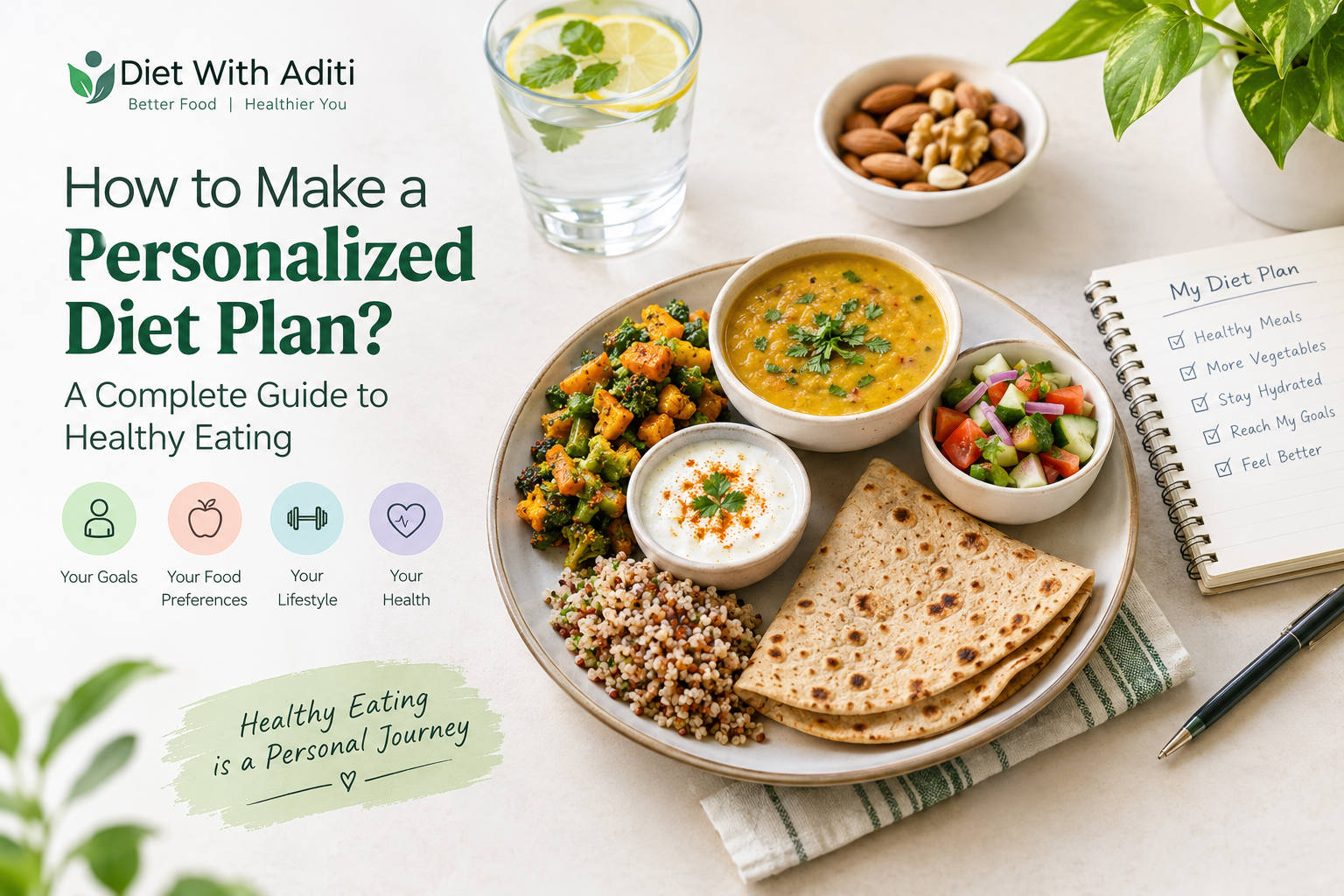
A healthy diet is not just about eating less or following a strict meal plan. It is about choosing the right foods, eating appropriate portions, and building habits that support your body’s nutritional needs and lifestyle.
If you want to lose weight, manage your weight, improve your energy levels, or develop healthier eating habits, a personalized diet plan can help you work toward your goals more effectively.
Unlike generic diet charts, a personalized nutrition plan considers your age, activity level, food preferences, health requirements, daily routine, and individual goals. With guidance from a qualified nutrition professional, you can develop a practical eating routine that fits your lifestyle.
In this guide, you will learn how to make a personalized diet plan, which factors to consider, and when professional guidance may be helpful.
What Is a Personalized Diet Plan?
A personalized diet plan is an eating plan designed around an individual’s nutritional needs, health goals, lifestyle, and food preferences.
For example, a person who wants to lose weight may need a different meal structure from someone who wants to gain muscle, improve sports performance, or manage a health condition.
A well-designed plan may include:
- Balanced meals with appropriate portions.
- Protein-rich foods, whole grains, fruits, and vegetables.
- Healthy fats and adequate hydration.
- Meal timing that suits your daily routine.
- Food choices that match your preferences and budget.
- Adjustments based on progress and changing nutritional needs.
The objective is to create a sustainable eating pattern rather than follow a restrictive diet that is difficult to maintain.
Why Is a Personalized Diet Plan Important?
Every individual has different nutritional requirements. A diet that works well for one person may not be suitable for another.
Here are some important benefits of personalized nutrition planning.
1. Supports Healthy Weight Management
A suitable diet plan can help you establish appropriate portion sizes, improve food choices, and maintain a balanced calorie intake according to your needs.
2. Helps Meet Your Nutritional Requirements
A balanced meal plan can help you obtain essential nutrients, including protein, fibre, vitamins, minerals, and healthy fats.
3. Fits Your Lifestyle
Your work schedule, sleeping routine, exercise habits, and food preferences influence how practical your diet plan will be. Personalized planning helps make healthy eating easier to follow.
4. Encourages Sustainable Habits
Instead of eliminating entire food groups unnecessarily, a balanced approach focuses on consistency, variety, and realistic changes you can maintain over time.
5. Provides Goal-Specific Guidance
Your nutritional needs may differ depending on whether your goal is weight management, muscle development, better everyday nutrition, or support for a particular health condition.
How to Make a Personalized Diet Plan Step by Step
Creating an effective meal plan starts with understanding your individual needs. Follow these steps to develop a practical foundation for healthier eating.
Step 1: Identify Your Health and Nutrition Goals
First, decide what you want your diet plan to help you achieve.
Common goals include:
- Healthy weight loss.
- Weight maintenance or weight gain.
- Muscle development and fitness support.
- Improved everyday eating habits.
- Meeting nutritional requirements during different life stages.
- Nutrition support for specific medical conditions.
Your goal will influence your energy requirements, food choices, and meal structure. Choose realistic objectives and avoid expecting immediate results.
Step 2: Understand Your Daily Nutritional Needs
Your body requires an appropriate balance of energy and nutrients to function well.
Your individual requirements can depend on:
- Age and sex.
- Height and body weight.
- Daily physical activity.
- Exercise frequency and intensity.
- Health history and current medical needs.
- Food preferences and dietary restrictions.
Calorie calculators can provide estimates, but they cannot fully account for every individual’s needs. For personalized guidance, a qualified dietitian or nutrition professional can help assess your requirements.
Step 3: Include All Major Food Groups
A balanced diet should provide a variety of nutrients rather than depend on a single food or food group.
Include these foods in your daily meals:
- Protein: Dal, beans, chickpeas, paneer, curd, eggs, fish, chicken, or tofu.
- Whole grains: Whole-wheat roti, oats, brown rice, millets, and other whole grains.
- Vegetables: Leafy greens and a variety of seasonal vegetables.
- Fruits: Whole fruits such as apples, bananas, oranges, guavas, and papayas.
- Healthy fats: Nuts, seeds, and suitable cooking oils.
- Calcium-rich foods: Milk, curd, or appropriate fortified alternatives.
For Indian meals, you can combine roti or rice with dal, vegetables, curd, and a protein source to create a balanced meal.
The right portions will depend on your individual energy needs, preferences, and health goals.
Step 4: Plan Your Meals Around Your Routine
A diet plan should fit your real daily schedule.
For example, someone who works long hours may need convenient meals and planned snacks, while someone who exercises regularly may need to pay closer attention to meal timing and recovery nutrition.
A simple meal structure could look like this:
- Breakfast: Vegetable poha with curd, or oats with milk and fruit.
- Lunch: Roti or rice, dal, seasonal vegetables, and curd.
- Evening snack: Fruit, roasted chana, or a suitable snack based on your needs.
- Dinner: Roti with vegetables and paneer, tofu, dal, or another protein source.
This is only an illustrative example, not a personalized prescription. Your portion sizes and meal choices should reflect your nutritional requirements and preferences.
Step 5: Consider Your Food Preferences and Budget
A healthy diet does not have to be expensive or complicated.
You can create balanced meals using locally available foods, seasonal produce, and familiar Indian recipes. Vegetarian, vegan, and non-vegetarian diets can all be planned to meet nutritional needs when properly balanced.
Choose foods you enjoy and can access consistently. This makes your eating plan easier to follow in the long term.
Step 6: Drink Enough Water
Hydration is an important part of healthy eating. Your fluid requirements can vary depending on your activity level, weather, health, and other factors.
Drink water regularly throughout the day and increase fluid intake when appropriate, such as during hot weather or exercise. People with medical conditions that require fluid restrictions should follow their healthcare professional’s advice.
Step 7: Monitor Your Progress and Make Adjustments
Your first diet plan may need adjustments as your routine, activity levels, or goals change.
Monitor practical indicators such as energy levels, hunger, meal consistency, exercise recovery, and progress toward your goals. If weight management is your objective, consider trends over time rather than reacting to daily fluctuations.
Avoid making drastic dietary changes based on short-term results. Seek professional advice if you experience persistent fatigue, excessive hunger, digestive difficulties, or other concerning symptoms.
Sample Indian Diet Plan for a Day
The following sample shows how balanced meals might look in a typical Indian eating routine.
| Meal | Example food options |
|---|---|
| Early morning | Water, if desired |
| Breakfast | Vegetable poha with curd |
| Mid-morning | Seasonal fruit |
| Lunch | Roti, dal, vegetables, and curd |
| Evening snack | Roasted chana or a suitable snack |
| Dinner | Roti or rice, vegetables, and paneer, tofu, dal, or another protein source |
Important: This sample is not suitable for everyone as written. The quantities, meal frequency, and food choices may need to change based on your age, activity level, health requirements, preferences, and goals.
Common Mistakes to Avoid When Creating a Diet Plan
Even a well-intentioned diet plan can become difficult to maintain if it is too restrictive or unrealistic.
Avoid these common mistakes:
- Following someone else’s diet chart: Another person’s calorie intake and nutritional requirements may be different from yours.
- Skipping meals unnecessarily: Skipping meals is not required for weight loss and may not suit your appetite, routine, or health needs.
- Cutting out entire food groups without a reason: Unnecessary restrictions can make it harder to meet your nutritional requirements.
- Ignoring protein and fibre: Include suitable protein sources and fibre-rich foods as part of balanced meals.
- Expecting instant results: Sustainable changes generally require consistency and regular reassessment.
- Using unverified supplements or extreme diets: Seek qualified guidance before using supplements or making major dietary changes, particularly if you have a medical condition.
When Should You Consult a Dietitian?
You may benefit from professional nutrition guidance if you are unsure about your nutritional requirements or need a plan tailored to a specific goal.
A registered or appropriately qualified dietitian can help you assess your needs, develop a practical meal plan, and identify areas that may require attention.
Professional support may be particularly useful if you:
- Have a specific weight-management goal.
- Follow a vegetarian or vegan diet and need help meeting nutrient requirements.
- Have food intolerances or dietary restrictions.
- Need nutrition support for a medical condition.
- Have difficulty maintaining consistent eating habits.
- Want a structured approach that fits your work schedule and lifestyle.
For medical conditions, choose a professional with relevant qualifications and experience, and coordinate dietary changes with your healthcare team when necessary.
Get Personalized Nutrition Guidance with Diet With Aditi
Finding the right diet plan can feel confusing when you encounter conflicting advice online. A more practical approach is to focus on your individual requirements, food preferences, daily routine, and long-term health goals.
Diet With Aditi can be a starting point for exploring nutrition guidance suited to your needs. Visit Diet With Aditi to learn more about the available services and enquire about personalized nutrition support.
Whether you want to build healthier eating habits or work toward a weight-management goal, seek a plan that prioritizes balanced nutrition, realistic changes, and long-term consistency.
Ready to take the next step toward healthier eating? Visit dietwithaditi.com and explore the available options for getting started.
Frequently Asked Questions (FAQs)
1. How do I make a personalized diet plan at home?
Start by identifying your goals, understanding your nutritional needs, and including a variety of protein sources, whole grains, fruits, vegetables, and healthy fats. Plan meals around your routine and adjust portions according to your needs. For medical conditions or complex nutritional requirements, seek professional advice.
2. What information is needed to create a personalized diet plan?
Important information may include your age, height, weight, activity level, health history, dietary preferences, food allergies, lifestyle, and goals. A qualified nutrition professional may also ask about your eating habits and previous experiences with diet plans.
3. Can I make a diet plan for weight loss without skipping meals?
Yes. Skipping meals is not necessary for weight loss. A suitable eating plan can focus on appropriate portions, balanced meals, adequate protein and fibre, and an overall energy intake that matches your needs.
4. How long does it take to see results from a personalized diet plan?
The timeline varies according to your goal, starting point, consistency, health, and other factors. Some people notice changes in eating habits or energy levels before measurable changes in body weight. Focus on sustainable progress rather than rapid results.
5. Is a personalized diet plan better than a general diet chart?
A personalized plan can be more appropriate because it considers individual nutritional requirements, preferences, lifestyle, and health needs. A general diet chart may offer ideas, but it may not provide suitable portions or meet everyone’s nutritional requirements.
Conclusion
Learning how to make a personalized diet plan begins with understanding your goals, choosing balanced foods, planning realistic meals, and reviewing your progress. There is no single diet that works for everyone, so your eating routine should reflect your individual needs and circumstances.