 adittijain1988@gmail.com
 +91-9999518813
 WhatsApp: +91-9999518813


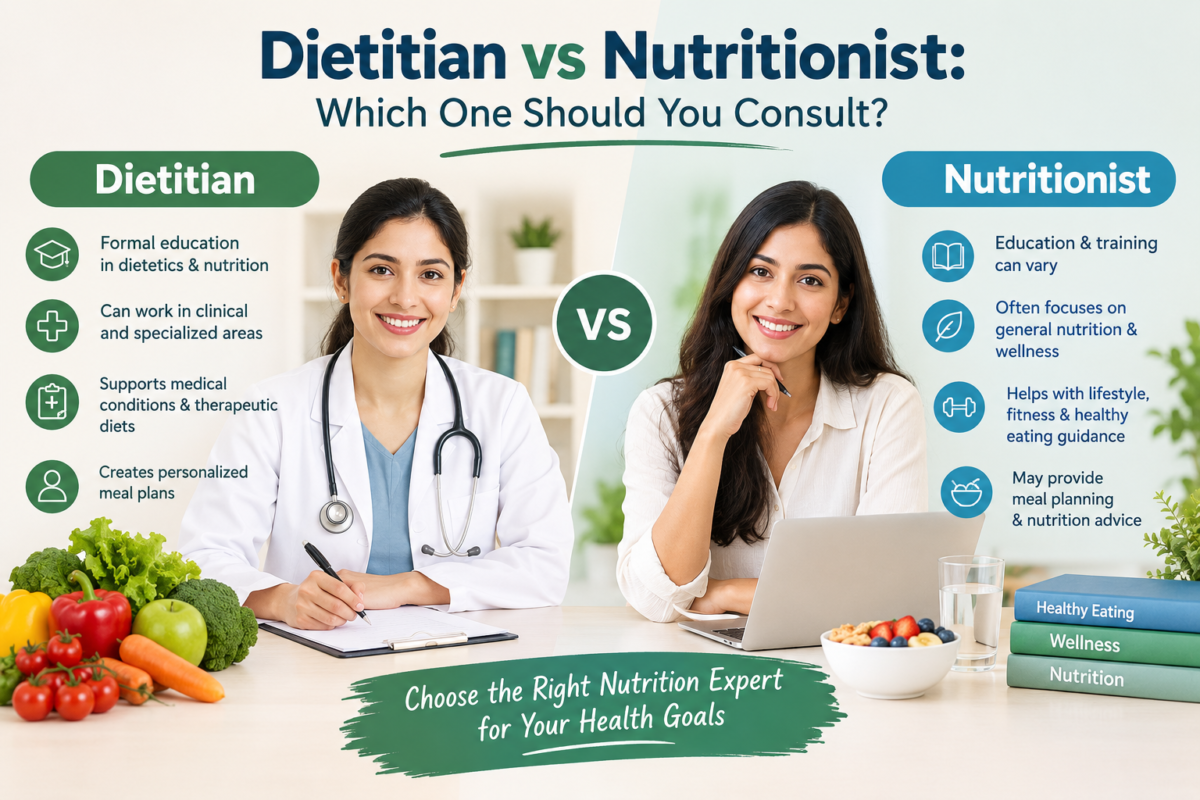
When looking for professional nutrition advice, you may come across the terms dietitian and nutritionist. While both may work in the field of nutrition, their education, training, professional roles, and scope of practice can differ.
If you are trying to improve your eating habits, manage your weight, or get nutrition guidance for a specific health concern, understanding the difference between a dietitian vs nutritionist can help you choose the right professional.
In this guide, we explain the key differences and when you may want to consult each one.
What Is a Dietitian?
A dietitian is a nutrition professional with formal education and training in dietetics and nutrition. Dietitians can work in areas such as clinical nutrition, community nutrition, food services, sports nutrition, and health education.
Depending on their qualifications and local regulations, dietitians may work with people who have specific medical or dietary needs.
A dietitian may help with:
- Personalized meal planning
- Weight management
- Healthy eating habits
- Therapeutic diets
- Nutrition education
- Lifestyle-related nutrition goals
- Nutrition support for specific health conditions
If you have a diagnosed medical condition and need dietary support, it is important to look for a suitably qualified professional with relevant clinical experience.
What Is a Nutritionist?
The term nutritionist is commonly used for professionals who provide guidance related to food, nutrition, and healthy eating. However, the meaning and regulation of the title can vary depending on the country and professional setting.
A nutritionist may focus on areas such as:
- General healthy eating
- Balanced meal planning
- Lifestyle nutrition
- Weight management
- Fitness nutrition
- Nutrition education
Because educational and professional requirements for the title “nutritionist” can vary, it is important to check the individual’s qualifications and experience.
Dietitian vs Nutritionist: Key Differences
| Factor | Dietitian | Nutritionist |
|---|---|---|
| Education | Formal education in dietetics/nutrition | Education and training can vary |
| Professional scope | Often includes specialized and clinical nutrition | Often focuses on general nutrition and wellness |
| Medical nutrition | May provide nutrition support within their qualifications and scope | Scope varies by qualification and local rules |
| Personalized diet plans | Common | May be offered |
| Health conditions | Can work with appropriate clinical training | Depends on qualifications and scope |
| Regulation | Can be regulated depending on jurisdiction | Regulation varies |
| Best for | Clinical, therapeutic, or specialized nutrition needs | General nutrition and wellness guidance |
The exact scope of both professionals depends on their qualifications, professional registration, and local regulations.
When Should You Consult a Dietitian?
A dietitian may be a suitable choice when you need professional nutrition guidance for a specific health or dietary concern.
You may consider consulting a qualified dietitian for:
1. Medical Nutrition Support
If you have a diagnosed condition requiring dietary management, look for a dietitian with appropriate clinical training and experience.
2. Weight Management
A dietitian can help develop an eating plan based on your lifestyle, food preferences, activity level, and individual goals.
3. Personalized Meal Planning
If you find it difficult to create balanced meals or maintain a consistent eating routine, a personalized nutrition plan may help.
4. Sports Nutrition
People who exercise regularly or participate in sports may seek a professional with relevant sports nutrition experience.
5. Special Dietary Requirements
A qualified professional can help you understand how to meet nutritional needs while following specific dietary preferences or restrictions.
When Should You Consult a Nutritionist?
A nutritionist may be appropriate when your primary goal is general nutrition and lifestyle improvement, depending on their qualifications.
You might consider a nutritionist for:
- General healthy eating guidance
- Meal planning
- Lifestyle nutrition
- Fitness-related nutrition advice
- Improving everyday food choices
- Nutrition education
Before booking an appointment, ask about the professional’s education, certifications, experience, and scope of practice.
Dietitian vs Nutritionist for Weight Loss
If your primary goal is weight management, either professional may offer guidance, but qualifications matter more than the title alone.
Look for someone who:
- Creates personalized nutrition plans
- Considers your lifestyle and food preferences
- Avoids unrealistic promises
- Provides practical meal options
- Offers follow-up support
- Has relevant qualifications and experience
Sustainable weight management generally involves long-term changes rather than extreme diets or quick-fix solutions.
Dietitian vs Nutritionist: Which One Should You Choose?
The right choice depends on your individual needs.
If you need nutrition support related to a medical condition or a specialized dietary requirement, consider a suitably qualified dietitian with relevant clinical experience.
If you mainly want general guidance on healthy eating, lifestyle nutrition, or meal planning, a qualified nutrition professional may be suitable.
Rather than choosing based only on the title, check the person’s education, professional credentials, experience, specialization, and scope of practice.
Questions to Ask Before Choosing a Nutrition Professional
Before booking a consultation, consider asking:
- What are your educational qualifications?
- Are you professionally registered or certified?
- What areas of nutrition do you specialize in?
- Do you have experience with my specific goal?
- Do you provide personalized meal plans?
- How often are follow-up consultations provided?
- What services are included in the consultation fee?
These questions can help you find a professional whose expertise matches your needs.
Conclusion
The difference between a dietitian and nutritionist can depend on their education, training, professional credentials, and local regulations.
For medical or specialized nutrition needs, look for a suitably qualified dietitian with relevant experience. For general wellness and nutrition guidance, a qualified nutrition professional may also be appropriate.
Ultimately, the most important factors are qualifications, experience, specialization, personalized guidance, and professional scope rather than the title alone.
Frequently Asked Questions
1. Is a dietitian better than a nutritionist?
Neither title is automatically better. The appropriate professional depends on your goals and the individual’s qualifications, experience, and scope of practice.
2. Should I see a dietitian or nutritionist for weight loss?
Both may provide weight-management guidance depending on their qualifications. Look for a professional who offers personalized, realistic nutrition advice and has relevant experience.
3. Can a dietitian help with medical conditions?
A suitably qualified dietitian with relevant clinical training may provide nutrition support for certain medical conditions. For a specific condition, ask about their clinical experience and professional scope.
4. What is the difference between a dietitian and nutritionist?
Dietitians generally have formal education and training in dietetics, while the qualifications and regulation associated with the term nutritionist can vary by location. Always check the individual’s credentials.
5. How do I find a qualified dietitian or nutritionist?
Check their educational qualifications, professional credentials, experience, specialization, reviews, consultation process, and whether their services match your specific nutrition goals.